Trail versus road running
Natural tracks, rocks, roots and steep gradients make road-running pace an unreliable measure. Footing and effort become essential.
ULTRARUNNER · 50+ FINISHES / TRAIL-RUNNING
Trail running involves changing terrain, elevation and weather. Learning to pace climbs, control descents and move safely matters at least as much as raw speed.
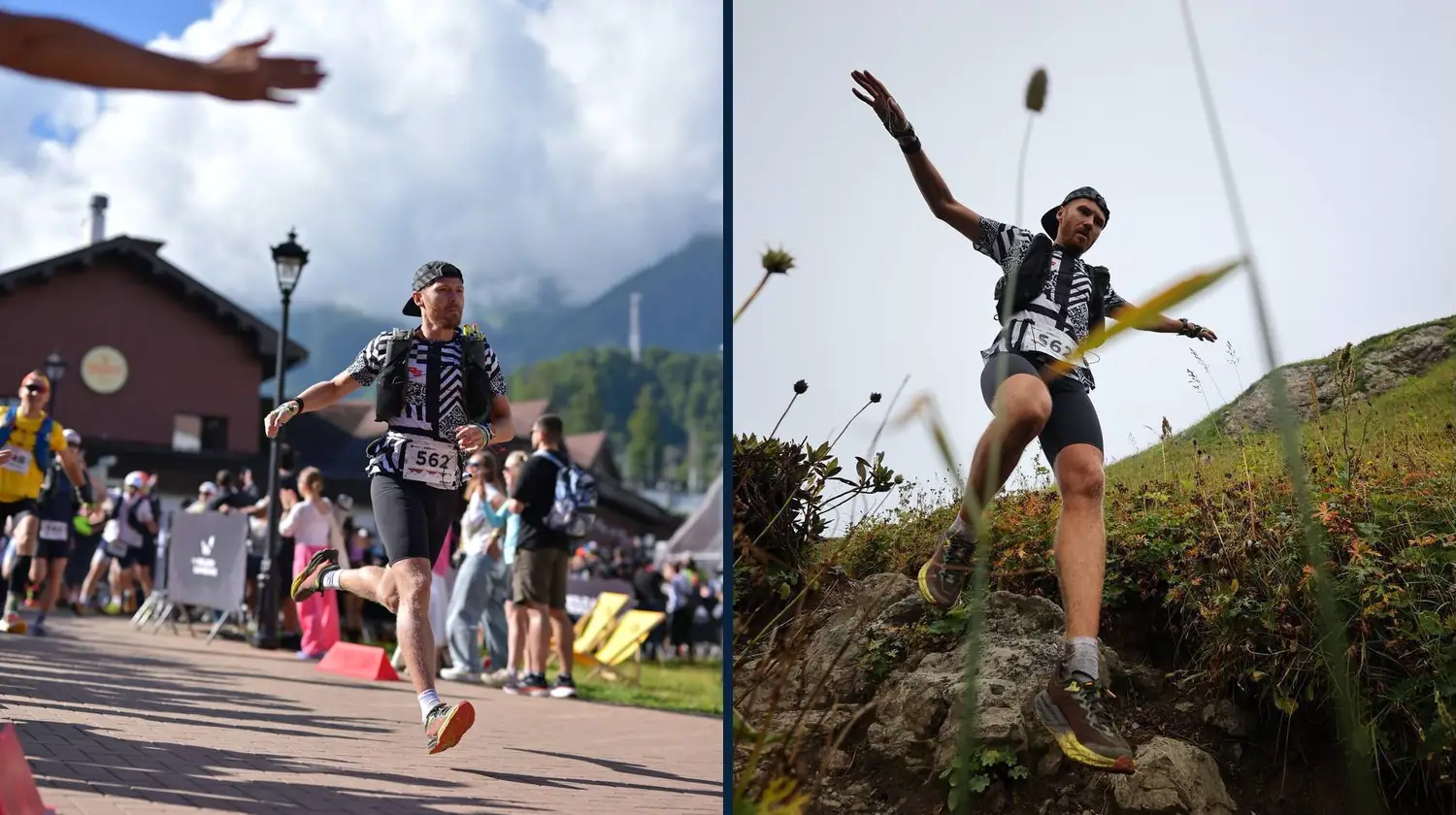
FIRST-HAND EXPERIENCE
50+ ultramarathon finishes. Experience racing for up to 30 hours and completing mountain ultras longer than 100 km with over 8,000 m of elevation gain. Race stats come from my personal journal; the full race archive is being expanded.
Explore the subject
Natural tracks, rocks, roots and steep gradients make road-running pace an unreliable measure. Footing and effort become essential.
Begin with familiar easy trails. Add elevation and technical difficulty gradually, alongside strength and balance work. Don't increase every type of stress at once.
Choose footwear for the surface and carry appropriate water, clothing, navigation and contact options. Mountain weather can change unexpectedly.
As distances increase, runners need to practise fuelling, moving at night, planned walking and checkpoint management. Ultra preparation is a separate skill set.
From the race journal
111 km, 7,800 m of climbing, heat, cold, gastrointestinal issues in the second half and a storm before the finish.
Race journal ↗No. Fast hiking is often more efficient on steep sections.
Hills, stairs and strength work can help, but technical descents need appropriate real-world practice.
VILRUN / REAL RUNNING EXPERIENCE
These are personal running experiences, not medical advice. Formal coaching education is in progress.